

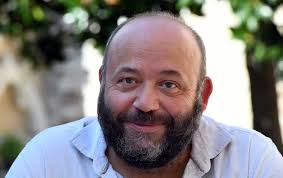
Gaetano Benčić, archaeologist and historian, is a long-time researcher of Istria’s ancient and medieval heritage and one of the most recognized experts on the history of the Mirna River valley and the areas of Tar and Vabriga. He graduated in History from the Faculty of Humanities in Trieste, after which he worked as a teacher at the Italian secondary school Leonardo da Vinci and the Italian primary school Edmondo de Amicis in Buje.
For many years, Benčić has participated in national and international historical and archaeological conferences, presenting the results of his research related to Istria’s cultural history. He is the author of monographs and scholarly works in both Italian and Croatian, and since 2014 he has worked as the curator of the Archaeological Department within the museum team.
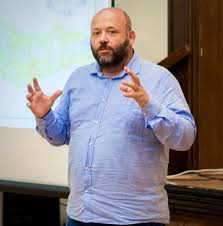
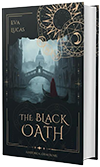
His academic work has also gained a literary dimension. Based on archival material from Venice, which he systematically studied and interpreted, Benčić compiled a historical synopsis that became the foundation for developing the historical novel The Black Oath ( Vrata Iskupljenja) , whose core is built upon verified historical motives and evidence. The novel’s author, Katja Restović, emphasizes that this exceptional and essential archival research conducted by Benčić enabled the historical background of the story to be confirmed, clarified, and structurally defined. From this material emerged the novel’s main characters: Martin Vellovich, Mate Corazza, Marija Zelenković, County Prefect Vuković, as well as the 300 testimonies of villagers who were interrogated in 1796. Although Benčić neither planned nor intended to become a key witness or guardian of this narrative line, in practice his work became precisely that: the starting point where historical layers and literary interpretation converge.
His areas of professional interest include ancient and medieval archaeology as well as the history and culture of Istria, and his role in shaping the historical framework of the aforementioned novel is yet another example of how scholarly work can unexpectedly intertwine with creativity.