


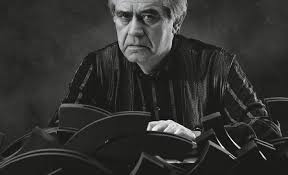
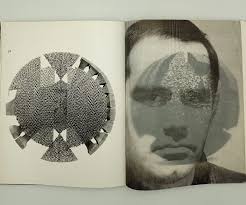
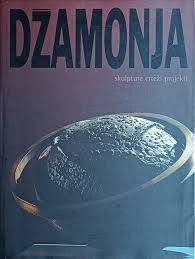
Dušan Džamonja (1928–2009) stands among the most significant Croatian and European sculptors of the 20th century — an artist whose monumental forms, memorials and spatial installations shaped the visual identity of an entire region and left a legacy far beyond national borders. Although trained as a sculptor, Džamonja’s work cannot be confined to sculpture alone: he was an architect of space, a creator of environments, a builder of visual worlds where material, light and landscape merge into a single artistic whole.
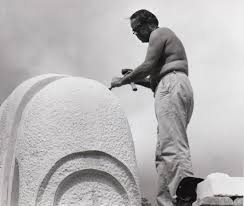
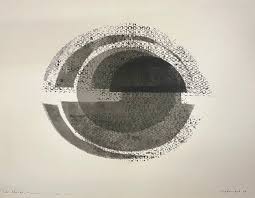
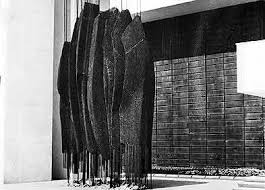
Džamonja studied at the Academy of Fine Arts in Zagreb, under the greatest Croatian sculptors — Vanja Radauš, Fran Kršinić and Antun Augustinčić. Early in his career he abandoned traditional figuration and turned toward abstraction, exploring constructions in steel, bronze, aluminium, corten and wire, introducing a new aesthetic of industrial material and spatial thinking to Croatian sculpture.

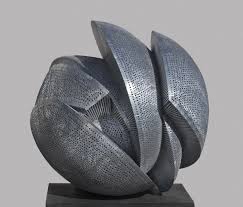
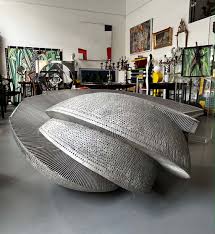


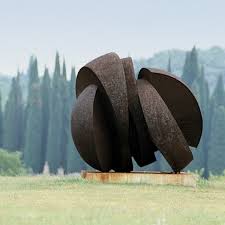
His works mark public spaces throughout the former Yugoslavia and Europe. Among the most famous are the monumental Monument to the Revolution of the People of Moslavina in Podgarić, the impressive memorial complex on Kozara, and the internationally acclaimed Ossuary in Barletta, Italy. These works have become symbols of courage, memory and Džamonja’s unique sculptural language — one that fuses architecture, sculpture and metaphor.
In the mid-1960s he created his most personal artistic sanctuary: the Sculpture Park in Vrsar. In this Mediterranean landscape he built his home, atelier, workshop and a vast open-air museum. Today the park is one of the most important places of contemporary art in Croatia — a space of monumental stillness and energy where sculptures exist in constant dialogue with the sky, the sea, the pine trees and time itself.
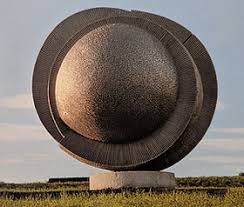
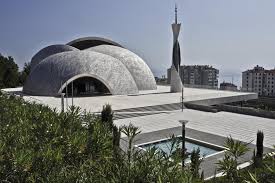
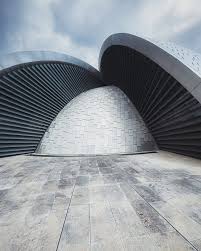




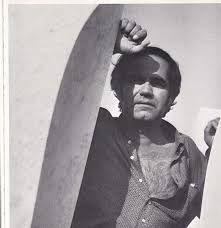
Many young artists from across Europe worked and learned there. Among them was Katja Restović, who spent three summers in Vrsar as a sculptor under the direct mentorship of Dušan Džamonja — a rare and invaluable opportunity to learn from a master whose works had already become part of European art history. Other sculptors, such as Dalibor Stošić, were also part of these workshops, but the artistic guidance, vision and inspiration came from Džamonja himself.
His international career was equally impressive: he exhibited at more than one hundred shows worldwide, participated in the Venice Biennale, where he was nominated for the Grand Prix, and received numerous prestigious awards, including the Rembrandt Prize of the Goethe Foundation. He was honored with the Vladimir Nazor Award for Lifetime Achievement, and became a member of academies such as HAZU and SANU, affirming his status as one of the most important artists of his era.
Today, decades after the creation of his greatest works, Džamonja’s sculpture park in Vrsar remains alive. His sculptures continue to radiate the same power, silence and presence; new generations of artists come seeking inspiration; and the traces of the great master can be felt in every metal structure, every reflection of light, every whisper of wind moving through the monumental forms.
Dušan Džamonja remains not only a great sculptor, but one of the greatest visionaries of European art — an artist whose work is timeless, universal and eternally relevant.